
From Hotel Viking in Viserbella you can drive to the best of the villages inland from Rimini: Santarcangelo in about 15 minutes, San Marino in about 35-40, and then San Leo, Gradara, Verucchio and the Valmarecchia. We’re open all year and have a private car park opposite the hotel, so you can mix beach days with castles, good food and the hills, in spring and autumn too.
Ask for a quote on WhatsAppCall 0541 721064
01The best villages inland
Driving times from the hotel are approximate and depend on traffic. The restaurants and osterias we mention are our own personal picks, not sponsored. Do book ahead and check opening days and times, as they change with the seasons.
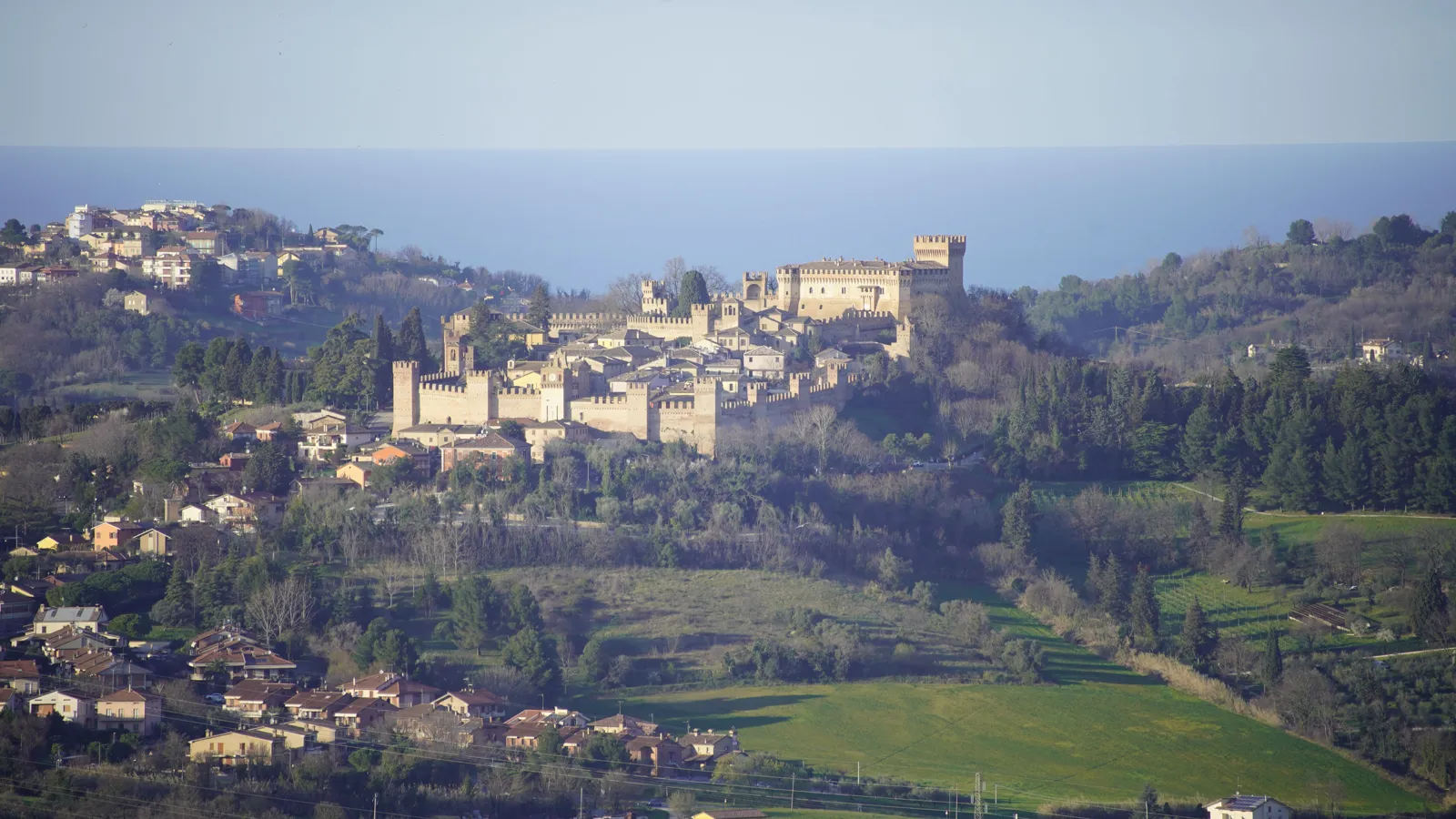
Santarcangelo di Romagna
About 15 minutes by car from Hotel Viking. A quarter of an hour from the sea is a town for unhurried strolls, busy squares and dinners that go on late. Santarcangelo di Romagna is the obvious first stop inland: close enough to pop over after a day on the beach, with enough to see to fill a whole afternoon. Tonino Guerra, the poet and Fellini’s screenwriter, was born here in 1920, and so was Pope Clement XIV, after whom the arch on the main square is named.

The square, the arch and the Campanone
The main square is Piazza Ganganelli, broad and bright, with a fountain in the middle and arcades where people stop for a coffee. In the evening the square lights up and the tables fill, while up on the hill you can see the Campanone, the civic clock tower. From here the old town climbs uphill: steep lanes, pastel houses, little shops and sudden views across the plain to the sea.

The fortress and the caves
At the top of the hill stands the Malatesta fortress, its great tower floodlit at night. The most intriguing part of Santarcangelo is underground: the hill is honeycombed with around 150 caves cut into the soft rock, tunnels, round chambers and niches, and nobody is quite sure who dug them or why. Some can be visited with local guides, others are tucked away in the cellars of houses and restaurants. Walking down a few steps into the cool, quiet sandstone is well worth doing.
Craftsmen, artists and legends
Santarcangelo is a town of craftsmen too. At the Antica Stamperia Marchi, Romagna linens are still hand-printed with old wooden blocks in the traditional rust colour: tablecloths, curtains and aprons that make a good souvenir. Just outside the centre, by the River Marecchia, is Mutonia, home of the Mutoid artists, where giant sculptures made from scrap metal turn a field into an open-air gallery. And in November, around the 11th, comes the San Martino Fair, also called the Fiera dei Becchi (Cuckolds’ Fair). Horns are hung under the arch, and legend says they swing when a husband with an unfaithful wife walks underneath.

Where to eat in Santarcangelo
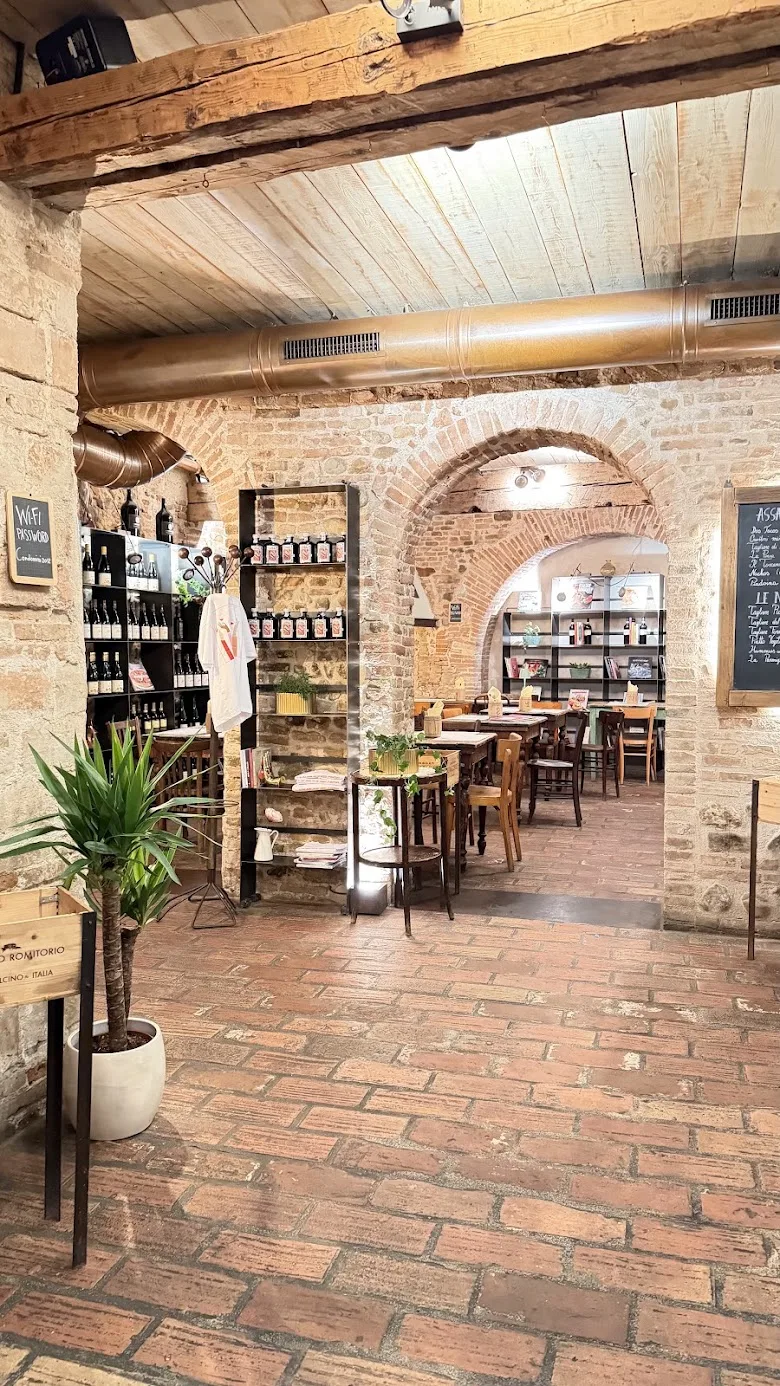
Plenty of people come here mainly to eat. The food is traditional Romagna cooking: warm piadina, passatelli in broth, strozzapreti, cappelletti and rabbit cooked porchetta-style, with a glass of Sangiovese. The best-known name is Osteria La Sangiovesa, in an 18th-century palazzo in the centre. It holds Gambero Rosso’s Tre Gamberi for 2026, is listed in Slow Food’s Osterie d’Italia guide, and much of its produce comes straight from the Tenuta Saiano estate. Ristorante Lazaroun, run by the same family since 1965, is known for its grilled meat and its tufa cave, where cheese and wine are aged and which you can look round. For somewhere more modern, try Dai Galletti near the fortress, with a garden among the olive trees. Ristorante Zaghini in Piazza Gramsci is another long-standing local favourite.

Events through the year
In May the old town fills with plants and flowers for Balconi Fioriti. July brings the Santarcangelo Festival, one of Italy’s leading theatre and performance festivals, which for more than fifty years has put on shows in the town’s squares and some very unusual spaces. On the last weekend of September comes the San Michele Fair, the oldest in town, celebrating the patron saint, the countryside and local food, including the local cipolla dell’acqua onion. In November, around St Martin’s Day, the Fiera dei Becchi rounds off the year with stalls, chestnuts and new wine.
Our tip: arrive late in the afternoon, walk up to the fortress for the sunset, visit one of the caves and stay for dinner. You’ll be back at the hotel, just by the sea, in a quarter of an hour.
San Marino
About 35-40 minutes by car from Hotel Viking. Going to lunch in San Marino means crossing into another country. The Republic sits on top of Monte Titano and is one of the smallest and oldest states in the world: tradition has it that it was founded in AD 301 by Marinus, a stonemason from Dalmatia who came to quarry the mountain’s rock. Since 2008 the old town and Monte Titano have been a UNESCO World Heritage Site: walls, towers, bell towers and, on a clear day, a view along the whole Romagna coast.
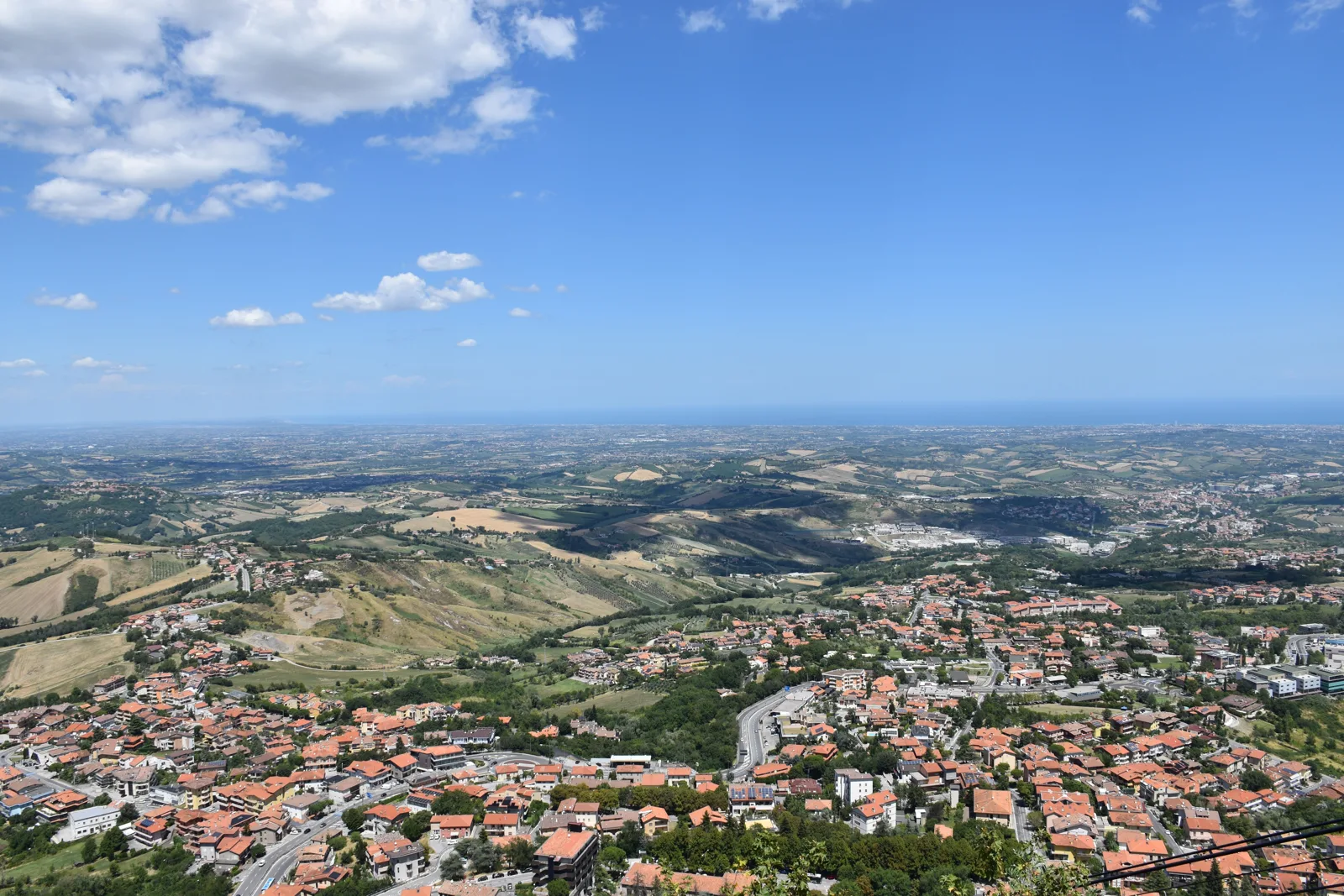
The Three Towers on the clifftop
The Republic’s emblem is the Three Towers, which also appear on its flag. The Guaita, or First Tower, is the oldest and the most photographed. It clings to the rock, with the cliff dropping hundreds of metres to the valley. A path with sweeping views, the Passo delle Streghe (Witches’ Pass), leads to the Cesta, the Second Tower, which houses the Museum of Ancient Arms. Further on, alone in the woods, stands the Montale, the Third Tower. The ridge is lovely to walk in the late afternoon, when the light turns golden.

The Palazzo Pubblico and the Republic’s ceremonies
The Palazzo Pubblico, seat of government, looks onto Piazza della Libertà, with its battlemented clock tower. Twice a year, on 1 April and 1 October, the two Captains Regent are sworn in here. They are the heads of state and serve for just six months. It’s an ancient ceremony with a procession, costumes and uniforms, and well worth seeing if you can. Around the square, the streets of the centre are a maze of steps, viewpoints, small museums and shops selling ceramics, stamps and collectors’ coins.

You can also leave the car in Borgo Maggiore and take the cable car up to the centre. It only takes a few minutes and the view over the valley is lovely. Come in winter and, with a bit of luck, you’ll find the Titano white with snow: snowy walls and evening lights make San Marino look like a nativity scene.

Shopping at your own pace
San Marino has long been a shopping trip: the old town has craft shops, local liqueurs, ceramics and souvenirs, and down in the valley there’s a modern outlet centre with big-name fashion brands. A day here can easily take in sightseeing, walks and shopping.
Food and drink on the Titano
San Marino’s food is a close cousin of Romagna cooking, with a few dishes of its own. Try nidi di rondine (‘swallows’ nests’), baked rolls of pasta with ham, meat, cheese and tomato; tagliolini with mutton sauce; and beans with pork rind. For pudding there’s the famous Torta Tre Monti, thin wafers and chocolate inspired by the Three Towers, and bustrengo at Christmas. To drink, the wines of the Consorzio Vini Tipici di San Marino: Brugneto and Tessano reds, Biancale and Roncale whites, and Moscato. Popular places to eat in the centre include Ritrovo dei Lavoratori for no-nonsense traditional food, Ristorante Cesare on the way up to the fortress, and La Terrazza at Hotel Titano for the view. For a quick piadina, go to Il Matterello.
Twice a year, on 1 April and 1 October, the Captains Regent are sworn in, with a procession in historical dress. At the end of July the old town goes back to the Middle Ages for the Giornate Medioevali, renamed San Marino Antiqua from 2026, with hundreds of performers in costume, musicians and crossbowmen. 3 September is the Feast of San Marino and the founding of the Republic, with a historical procession, a crossbow contest and fireworks. From late November to 6 January the Titano lights up for Il Natale delle Meraviglie, with Christmas markets, lights and shows.

Our tip: set off early so you have the towers almost to yourself, have lunch in the centre and head down at sunset. You’ll be back at the hotel in under an hour, in time for a swim in the pool.
San Leo
About 45 minutes by car from Hotel Viking. San Leo makes an impression the moment you see it: the village and its fortress sit on a huge, sheer-sided block of rock, like a stone ship above the Valmarecchia. The only way in is a road cut into the cliff, zigzagging up to the village gate, and the drive up is worth the trip on its own. Dante mentions San Leo in Canto IV of Purgatorio, and writers and artists have called it one of the most beautiful places in Italy for centuries.

Count Cagliostro’s fortress
The Renaissance fortress crowns the rock. It was redesigned for the Montefeltro family by the Sienese architect Francesco di Giorgio Martini, with round towers built to withstand cannon fire. For centuries it was thought impossible to take, and it later became a papal prison. Its most famous inmate was Giuseppe Balsamo, the legendary Count Cagliostro, alchemist and adventurer, who was held here until his death in 1795. His cell, known as the Pozzetto, is open to visitors and is one of the most powerful moments of the museum tour. From the ramparts you can see as far as San Marino and, on clear days, the sea.

Churches, legends and saints
The village, clustered round Piazza Dante Alighieri, has two ancient churches: the small, plain pre-Romanesque Pieve, and the sandstone cathedral. In the 10th century Berengar II, King of Italy, holed up on the rock here to hold out against Emperor Otto I. Tradition also says that it was here, in 1213, that Count Orlando Cattani gave St Francis the mountain of La Verna, where he later received the stigmata. Take your time and wander the lanes, stopping at the viewpoints.
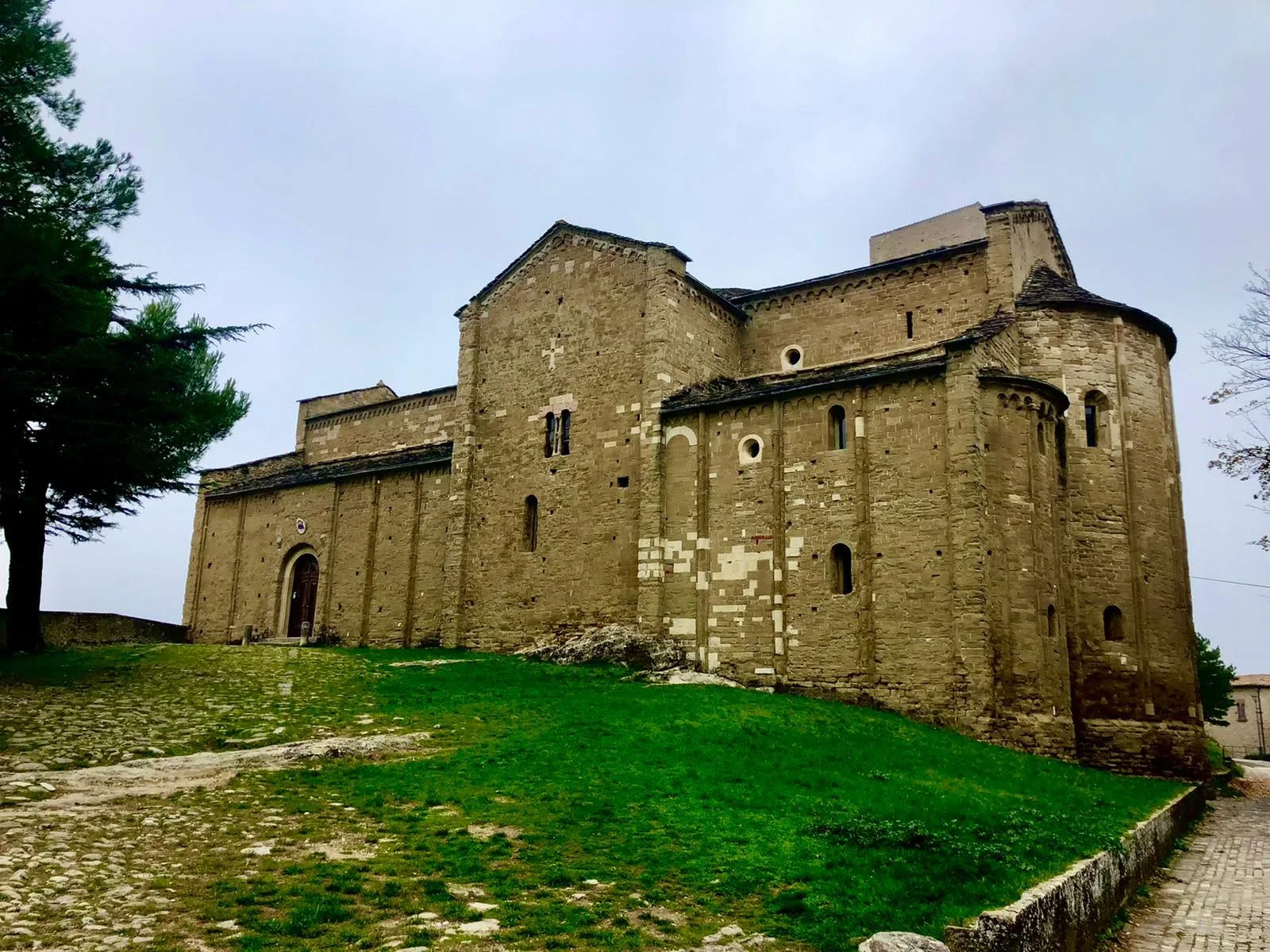
When to go? Spring, when the meadows round the rock are bright green, or autumn, when the valley turns red and gold and the air smells of chestnuts and truffles. In summer, go up early in the morning or late in the afternoon, when the low sun lights up the fortress stone.

Food: formaggio di fossa and truffles
San Leo’s food is Montefeltro cooking, heartier and more mountain-style than on the coast. The star is formaggio di fossa, a cheese matured in pits dug into the rock; nearby Talamello calls it “ambra” (amber) because of its colour. Then there are truffles, black or white depending on the season, passatelli, Montefeltro cappelletti, lamb and grilled meat. The classic address is Ristorante Locanda La Rocca, run by the same family since 1966 and listed in Slow Food’s Osterie d’Italia guide, known for passatelli with black truffle and dishes made with formaggio di fossa. Osteria La Corte di Berengario II is also popular for its home-made pasta, such as tagliatelle and ricotta ravioli, while people go to Osteria Belvedere mostly for the view.
In summer, usually in July, the San Leo Festival brings concerts of early and sacred music to the village’s churches and squares. At the end of August comes AlchimiAlchimie, two nights in honour of Count Cagliostro with fire shows, magic, street performers and fireworks over the fortress. It’s the most spectacular event of the year.

Our tip: give San Leo a whole day, perhaps together with Pennabilli, or with Sant’Agata Feltria on the autumn Sundays of the truffle fair. Wear comfortable shoes: the climbs are steep, but every bend brings a new view.
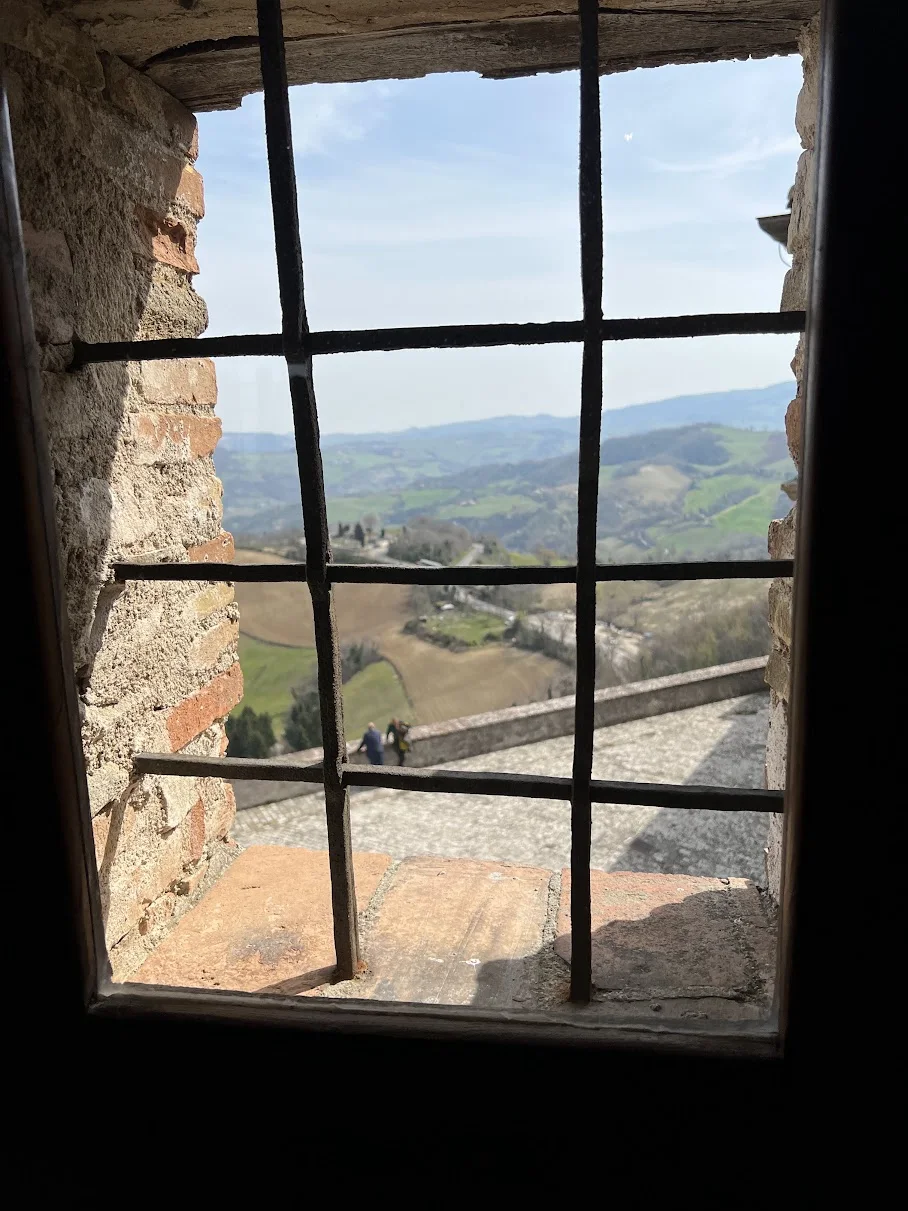
Gradara
About 35 minutes by car from Hotel Viking. Just over the border in the Marche, on a hill facing the sea, Gradara looks like something from a storybook: a double ring of battlemented walls, towers and fortified gates, with the Rocca (fortress) on top. It’s one of the best-preserved medieval villages in Italy, one of the Borghi più belli d’Italia (Most Beautiful Villages in Italy), and in 2018 it was voted Borgo dei Borghi. Above all, it’s the setting for one of the most famous love stories in literature.
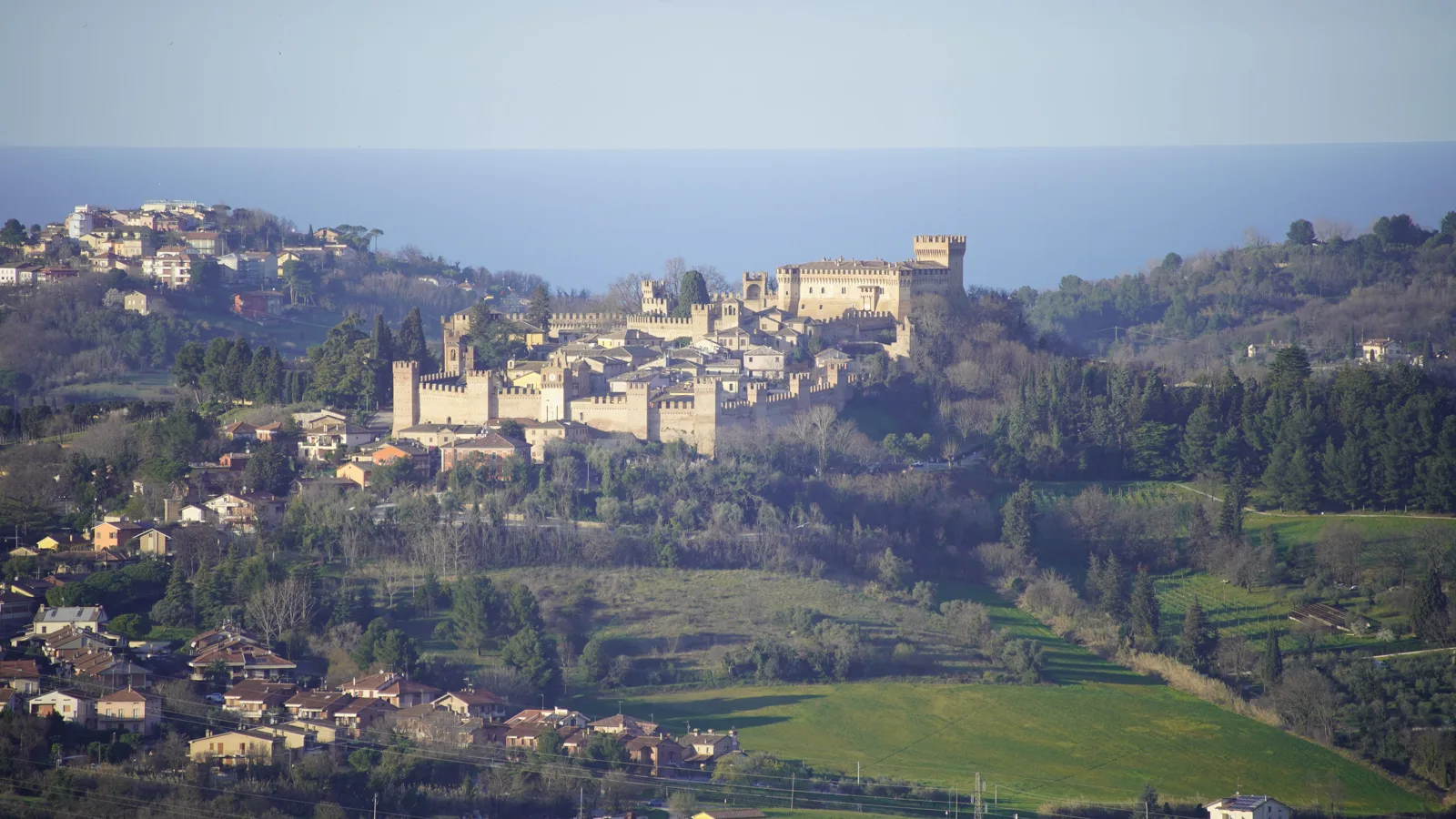
Paolo and Francesca, the love Dante never forgot
Tradition has it that it was within these walls that Francesca da Polenta, married off to Gianciotto Malatesta, fell in love with his brother Paolo. They were reading the story of Lancelot and Guinevere together when they first kissed. They were caught, and both were killed. Dante meets them in Canto V of the Inferno, swept round forever in the storm that carries the lustful, and his lines have drawn romantic pilgrims to Gradara ever since. In the Rocca you can see Francesca’s room, with the bed, the lectern and the trapdoor through which, so the story goes, Paolo tried to escape.
Walls, towers and walkways
The Rocca was built by the Malatesta and later passed to the Sforza and Della Rovere families. Lucrezia Borgia lived here as the wife of Giovanni Sforza. Today it’s a museum showing what a Renaissance court was like, with frescoed rooms, armour and period furniture. The best part is walking the walls: the sentry walk takes you right round the village between the battlements and arrow slits, with the Adriatic glittering in the distance. Below the walls, paths and gardens with cypresses and olive trees make for a pleasant stroll.

In some summers, in July, the village stages the Assedio al Castello (Siege of the Castle), a historical re-enactment with soldiers, fire, musicians and shows that take Gradara back to the 15th century. Out of season the lanes are quiet again, and lovely for a walk together at sunset, when the stone turns orange. The main street up to the Rocca is lined with craft shops, wine bars and little delis where you can pick up something to take home.
Food: formaggio di fossa and Marche cooking
Gradara’s food mixes Romagna and the Marche: piadina and crescia flatbreads, home-made pasta, chargrilled meat and formaggio di fossa, with a Sangiovese from the Colli Pesaresi or a crisp Bianchello del Metauro. One of the best-known places is Ristorante Osteria La Botte, in a 17th-century palazzo at the entrance to the village, famous for dishes made with formaggio di fossa, such as filled cappellacci. Osteria Il Gufetto is a local favourite for pasta and meat, Locanda Quinto Canto has a terrace looking onto the keep, and Taverna Paradiso is popular for its mixed starters and tagliata steak.

From late November to 6 January the village becomes the Castello di Natale (Christmas Castle), with Christmas markets, shows and guided tours along the floodlit walls. In some summers, in August, Gradara also hosts The Magic Castle, a festival of magic and fantasy for grown-ups and children. The July Assedio al Castello isn’t held every year, so check the dates before you go.
Our tip: half a day is enough for Gradara. Visit the Rocca in the afternoon, walk the walls at sunset and have dinner in the village. You’ll be back at the hotel in just over half an hour, with time for a stop on the seafront if you like.
Verucchio
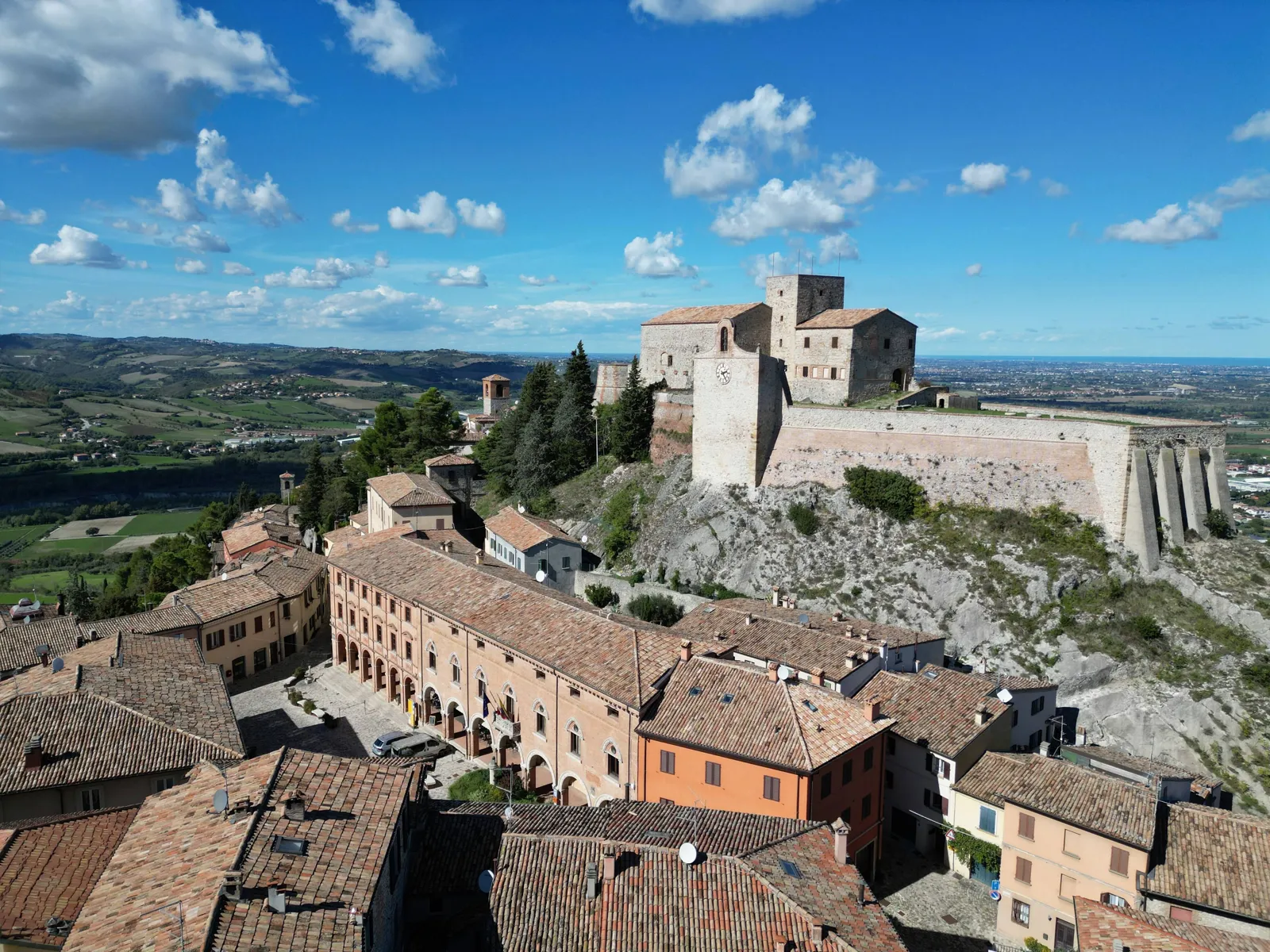
About 25 minutes by car from Hotel Viking. Verucchio is the Valmarecchia’s balcony: a village perched on a spur of rock where, at sunset, you can watch the valley run down to Rimini and the sea. It’s seen as the birthplace of the Malatesta, the family that ruled Rimini and much of Romagna for centuries. The founder, Malatesta da Verucchio, was so well known that Dante put him in the Inferno as the mastin vecchio (the old mastiff). Yet when you reach the village square, what strikes you is the calm: stone houses, geraniums in the windows, and silence broken only by church bells.

The Rocca del Sasso and the Villanovan treasures
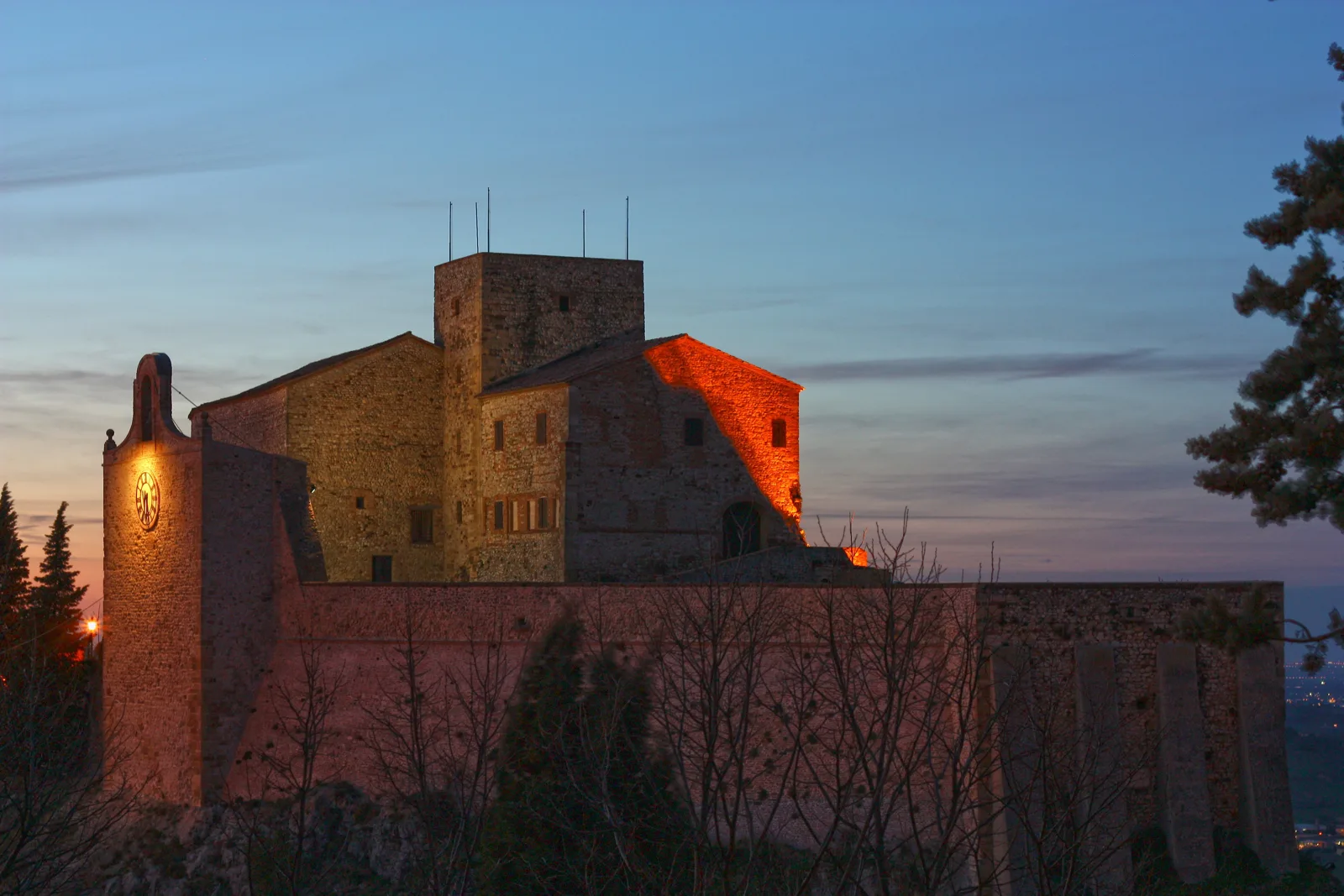
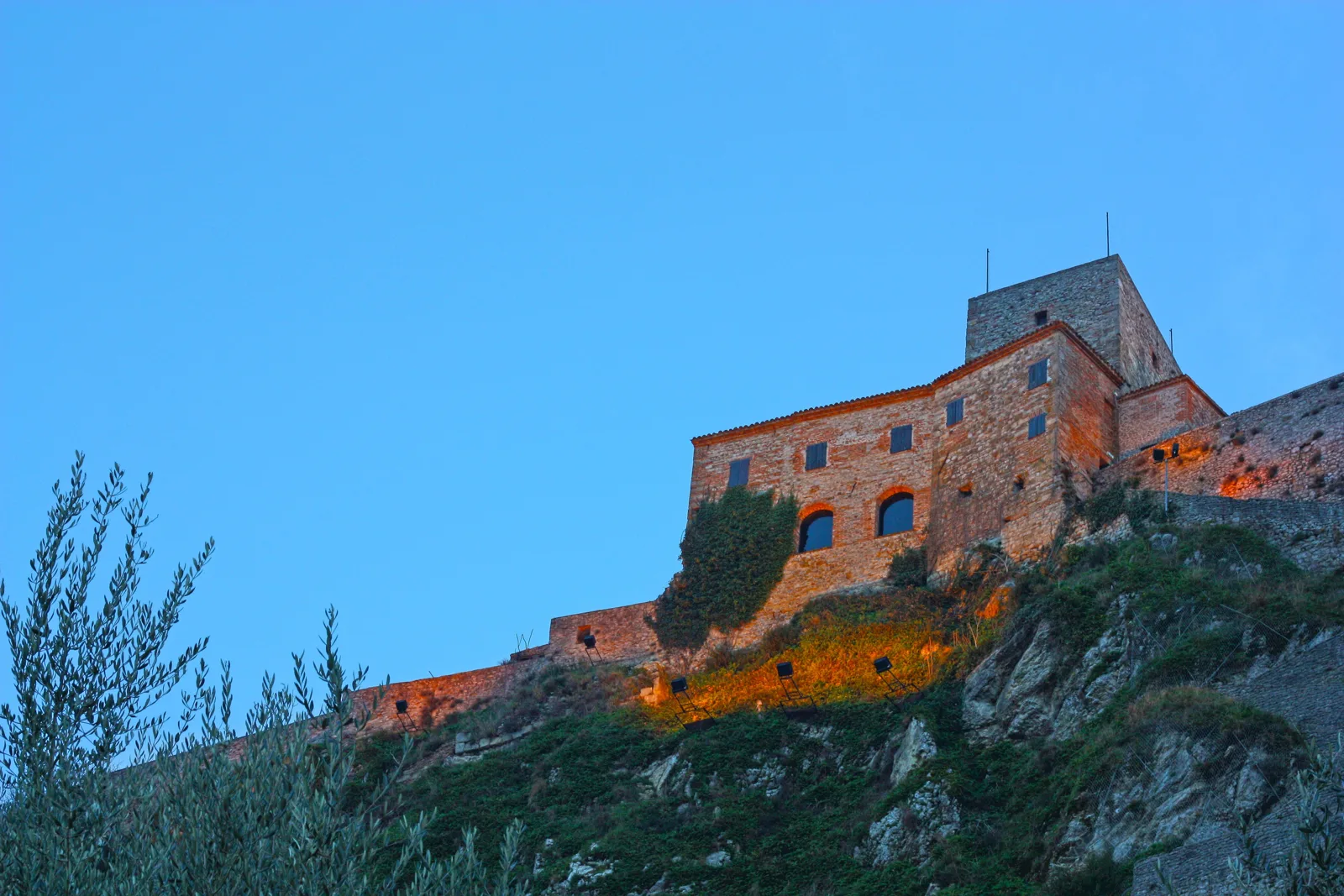
At the top of the village stands the Malatesta fortress, known as the Rocca del Sasso, one of the family’s oldest strongholds. Its rooms, towers and terraces give one of the best views in the province, and at night, floodlit, it seems to float above the rooftops. Verucchio’s history goes back much further, though: nearly three thousand years ago the Villanovan civilisation thrived here. The Museo Civico Archeologico, in the former convent of Sant’Agostino, holds remarkable finds, from amber jewellery of astonishing delicacy to the famous wooden throne, which has survived almost intact. It’s a small museum that will genuinely surprise you.
Walks, convents and cypresses
After the Rocca, wander the lanes, stop at the viewpoints and visit the Collegiata church. On the way down towards Villa Verucchio is the Franciscan convent of Santa Croce. In its cloister grows a towering cypress that, according to tradition, St Francis planted himself. At around eight hundred years old it’s one of the oldest trees in Italy. Verucchio is also a good base for walks along the River Marecchia and bike rides through the hills, past vineyards and olive groves that change colour with the seasons. In autumn, when mist rises from the valley and the village seems to float above the clouds, the view is beautiful.
Food: cappelletti, Mora Romagnola and Sangiovese
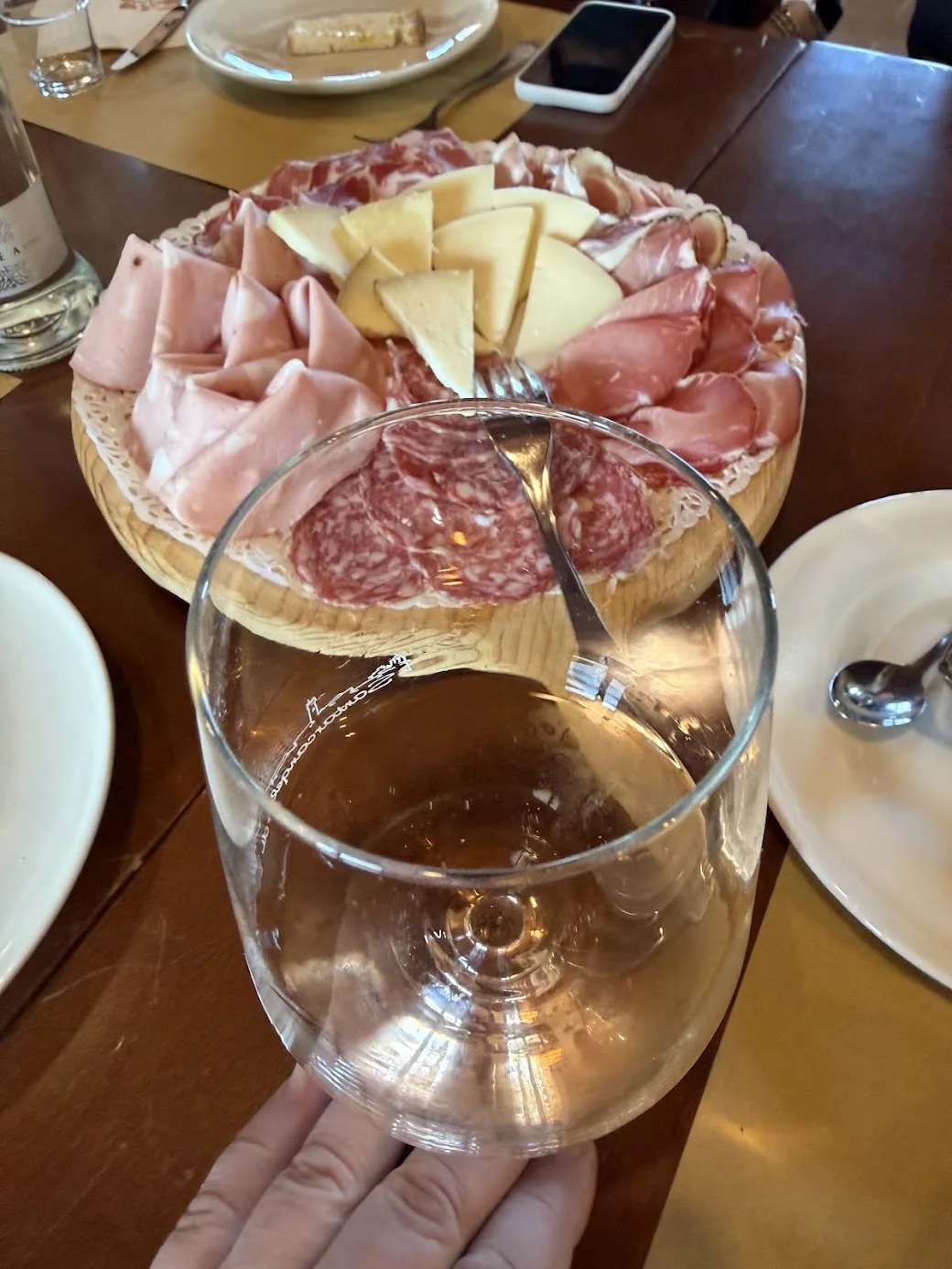
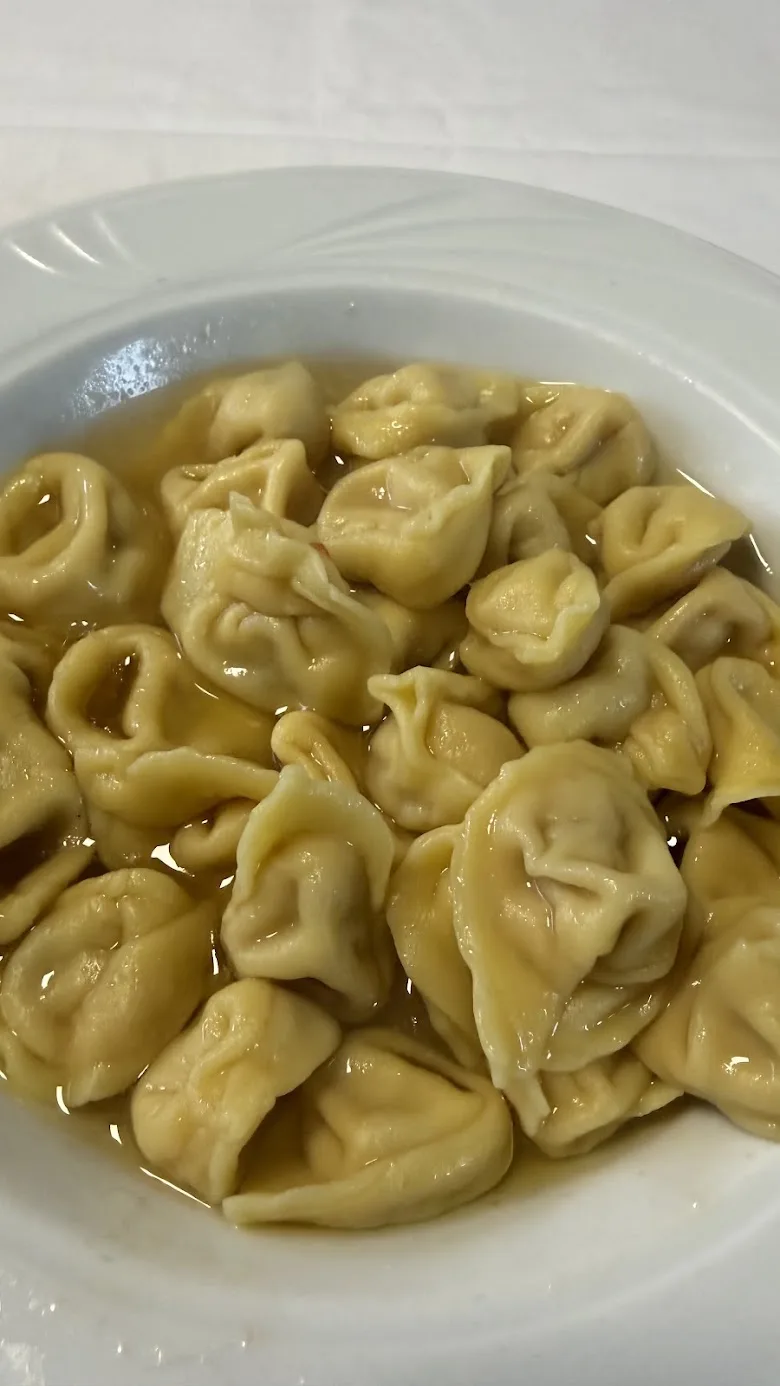
Verucchio’s food is the cooking of the Rimini hills: hand-rolled cappelletti and tagliatelle, salumi from Mora Romagnola (a local breed of pig saved from extinction), truffles, extra virgin olive oil from the hills and Sangiovese from the Colli di Rimini. The best-known restaurant is La Rocca, opened in 1946 by Sante and Margherita and now run by the third generation. People come for Margherita’s legendary cappelletti, the restaurant’s own Mora Romagnola salumi and a terrace with views all the way to the sea. In the old town, Al Mastin Vecchio is popular for truffle tagliatelle and tagliata steak, and for a glass of wine and a few nibbles there’s the osteria and wine bar Tiee – Cibo & Vino. And don’t skip a board of salumi, cheese and piadina: it’s how dinner starts in Romagna.
In July the village square hosts the Verucchio Music Festival, three evenings of open-air concerts under the stars. In early October the Festa della Storia (Storia, segreti e misteri) fills the village for two weekends with talks, tours and events on the Etruscans, the Villanovans and the Middle Ages.
Our tip: drive up to Verucchio in the late afternoon, visit the archaeology museum, watch the sunset from the Rocca and stay for dinner. It’s less than half an hour back to the hotel.
Montebello (Poggio Torriana)
About 30 minutes by car from Hotel Viking. Montebello, part of Poggio Torriana, is a cluster of stone houses, cobbled lanes and a castle looking out over the Valmarecchia, where one of Italy’s best-known legends has been told for more than six hundred years. Leave the car and walk up to the viewpoint.

The legend of Azzurrina
Montebello’s main sight is its castle, visited on guided tours that tell the story of Azzurrina. Guendalina, the lord’s daughter, is said to have been an albino child. To shield her from superstition her hair was dyed, and the dyes of the day gave it a bluish sheen. On the summer solstice of 1375, while playing with a rag ball, she went down into the castle’s ice house and was never seen again. Legend has it that in years ending in 0 or 5, on the day of the solstice, her voice can still be heard. Believe it or not, the castle tour, with its furnished rooms and the ice house, goes down well with adults and children alike.
The Madonna di Saiano, high above the river
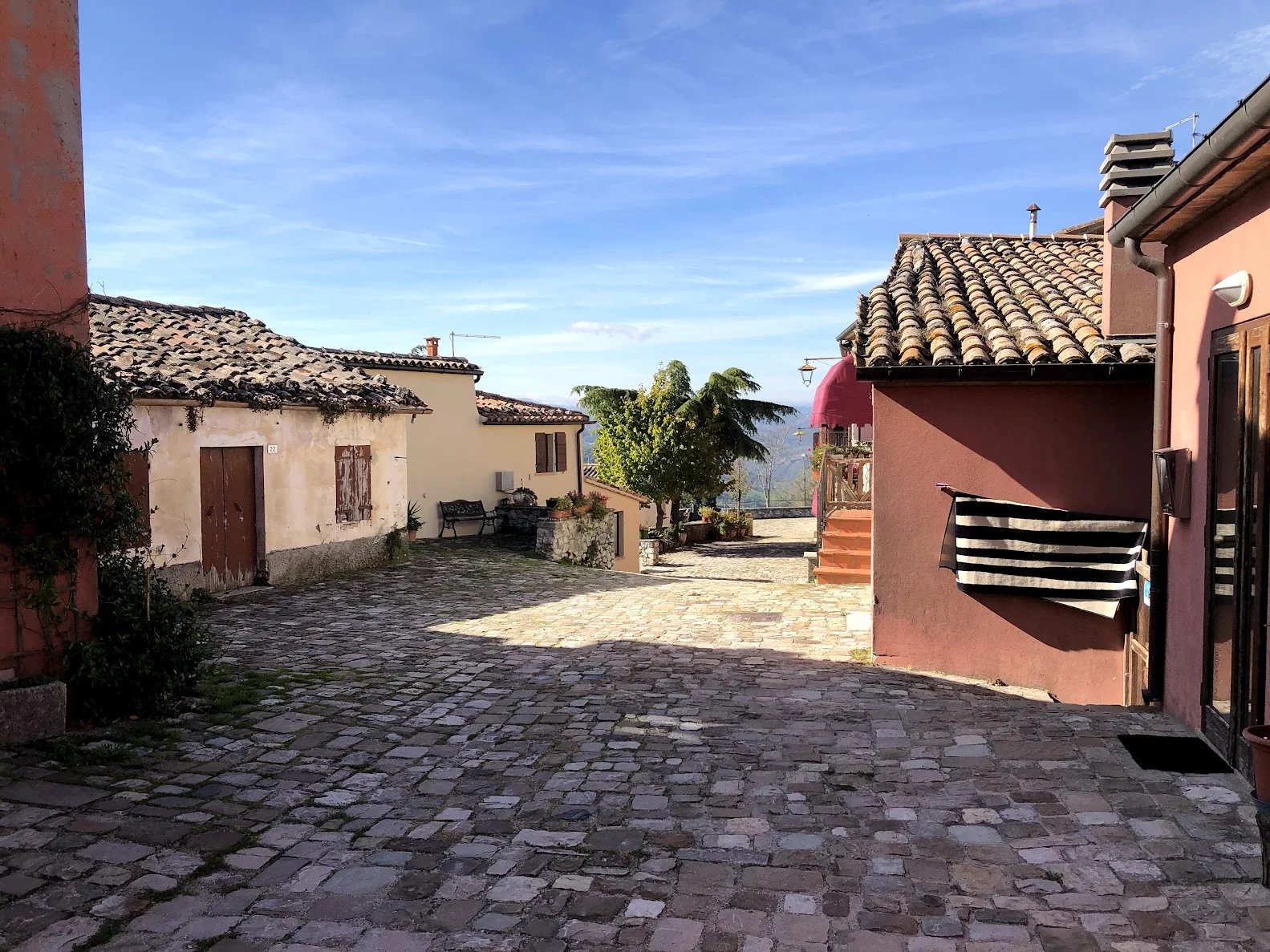
A few minutes from Montebello, on a spur of rock above the River Marecchia, stands the sanctuary of the Madonna di Saiano with its distinctive round tower. It’s a beautiful spot, especially in spring and autumn, when the soft light warms the stone and the valley is full of colour. Paths and gravel lanes lead off through fields, woods and vineyards, with lovely views over the Valmarecchia.
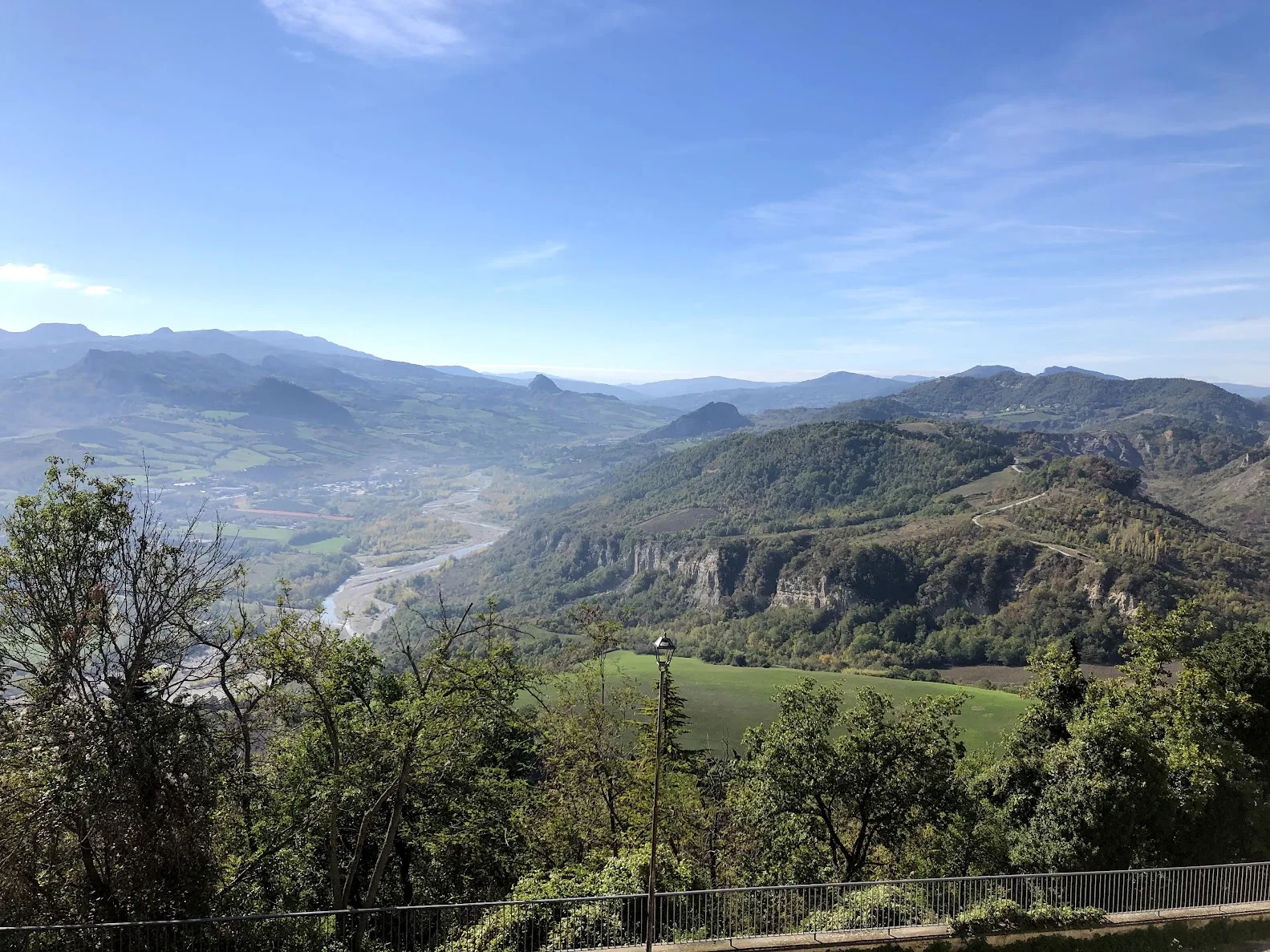
Tenuta Saiano, the winery in the hills
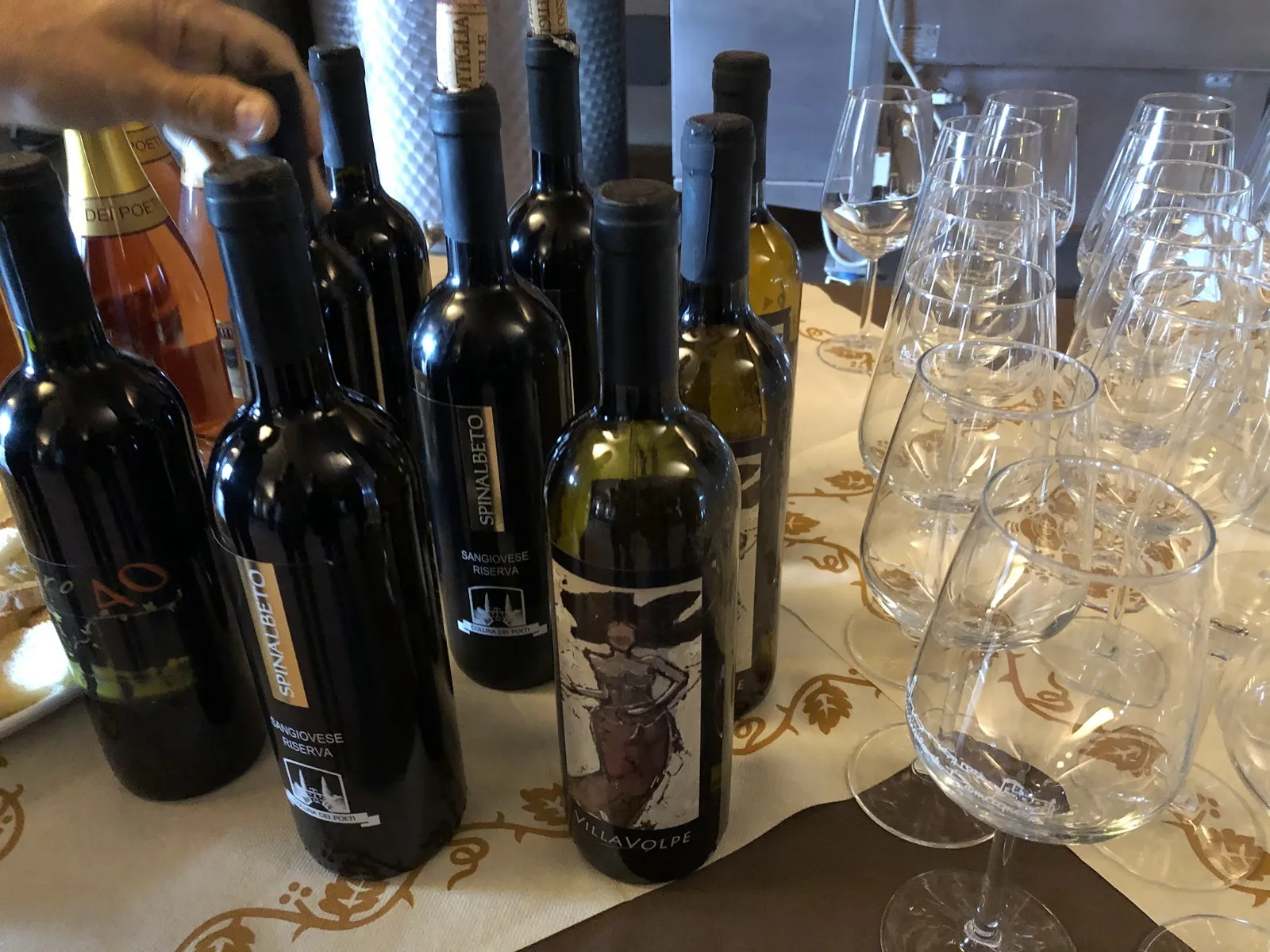
In these same hills is Tenuta Saiano, an organic winery set up in 2003 by the owners of Osteria La Sangiovesa in Santarcangelo. They make Sangiovese Superiore and Riserva, a sparkling rosé and Rebola, the local white of the Colli di Rimini, and you can buy the estate’s wines and produce in the shop. The estate is also home to the Olfattorio, a creative workshop where they make aromatic liqueurs and vermouth: dozens of jars of herbs, roots and spices that you can sniff one by one to work out what goes into each recipe. Tours and tastings are by appointment.
Food: porcini, cappelletti and country osterias
The cooking in these hills tastes of the woods and the farmyard: cappelletti, tagliatelle, coniglio in porchetta (stuffed roast rabbit), salumi and, in autumn, porcini mushrooms, often served fried, and truffles. Il Chiosco di Bacco, listed in the Michelin Guide, is a reliable choice for home-made pasta and dry-aged meat, with a good wine list. In Torriana, Povero Diavolo – Osteria Sociale, a long-standing local restaurant, reopened in 2024 as a social co-operative, with dishes such as rabbit cappelletti. In Montebello, below the castle, Osteria del Borgo “dalla Elide” is where everyone goes for a plate of hand-made pasta after the tour.
At the end of July Torriana holds Scorticata – La Collina dei Piaceri: four evenings of food, Colli di Rimini wines, guest chefs and music, with a stunning view over the valley. In early summer the Festa Contadina celebrates piadina and country traditions. And if you like a mystery, there’s the summer solstice in years ending in 0 or 5, when Azzurrina is said to make herself heard. The next one is in 2030.
Our tip: do Montebello castle, the Madonna di Saiano and Tenuta Saiano in one day. You’ll be back at the hotel in half an hour, with a few bottles of Sangiovese in the boot.
Pennabilli and Sant’Agata Feltria
About 1 hour by car from Hotel Viking. As you drive up the Valmarecchia into the Montefeltro, the scenery changes: hills turn into mountains, the woods thicken and the air smells of chestnuts. Here, a few kilometres apart, are two villages straight out of a storybook: Pennabilli, the village of poetry, and Sant’Agata Feltria, the village of fairy tales and truffles. It’s worth the drive, especially in autumn.
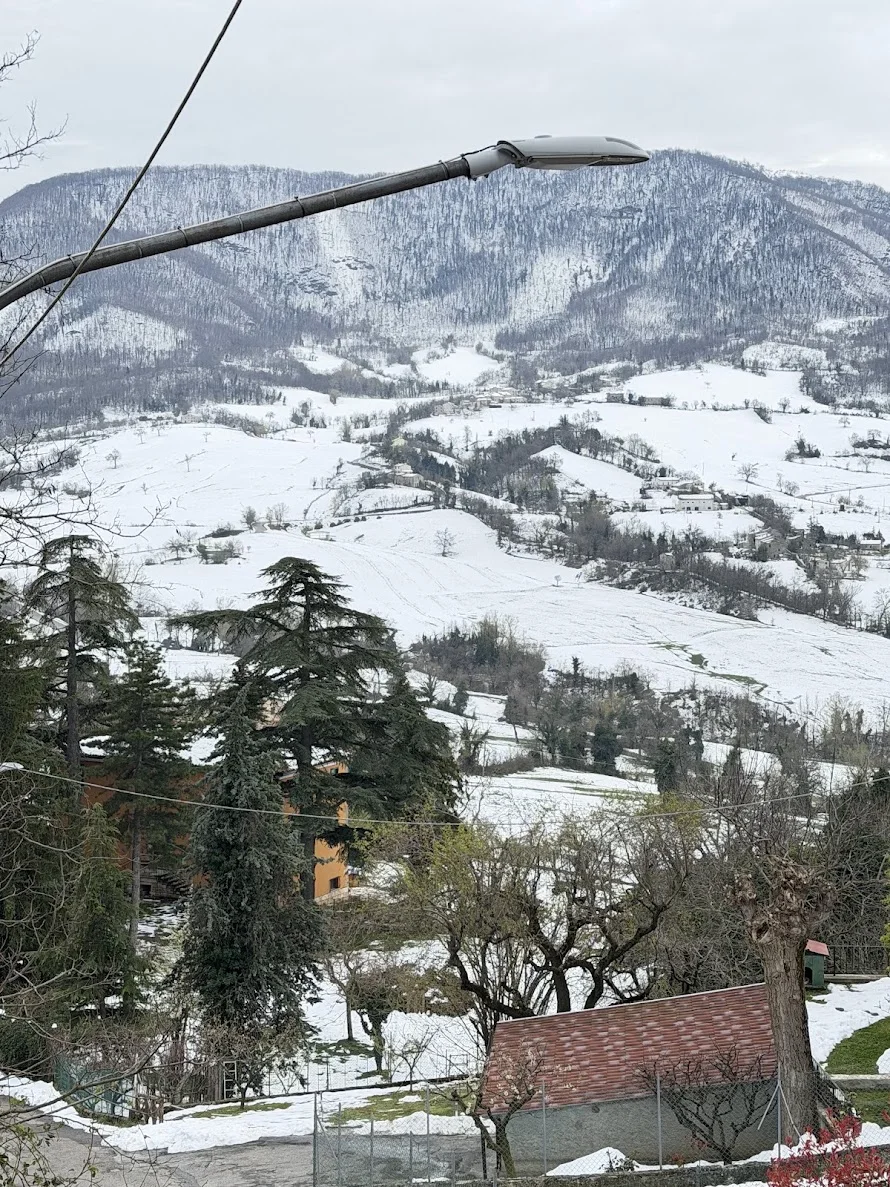
Pennabilli and Tonino Guerra’s ‘places of the soul’
Pennabilli grew out of two old castles, Penna and Billi, each on its own spur of rock. The poet and screenwriter Tonino Guerra, who wrote Amarcord with Fellini, spent his last years here and filled the village with small surprises he called i luoghi dell’anima (places of the soul). The best known is the Orto dei frutti dimenticati (Garden of Forgotten Fruits), where old and now rare fruit trees grow among sculptures, sundials and quiet corners of poetry. Walk round Pennabilli and you’ll come across more of them everywhere: inscriptions, fountains and installations of his own invention.
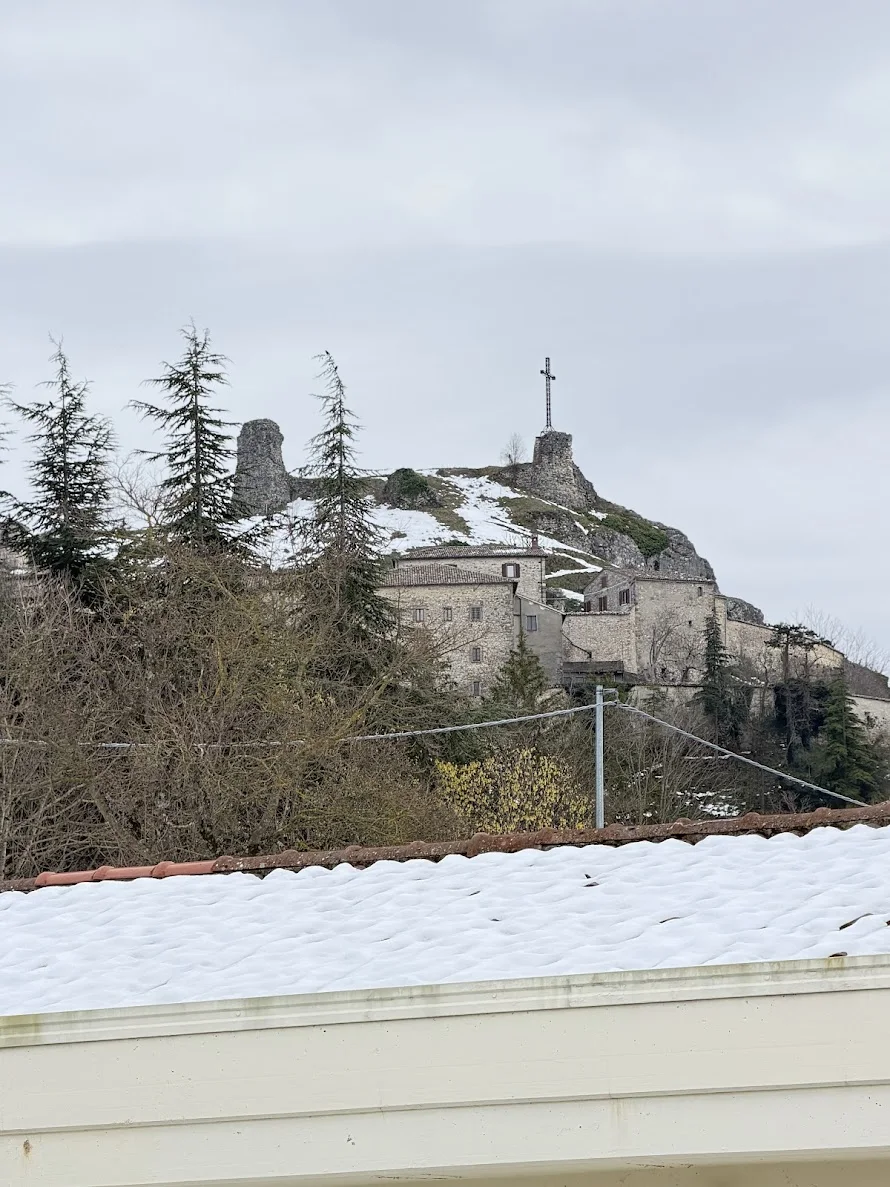
The village also has an unexpected link with Tibet. In the 18th century a Capuchin friar born here, Fra’ Orazio della Penna, spent many years as a missionary in Lhasa. Because of this the Dalai Lama has visited Pennabilli twice, in 1994 and 2005, and unveiled a copy of the Lhasa bell that now rings out on the hill. In July the village hosts one of Italy’s longest-running antiques fairs, which draws collectors from all over the country.

Sant’Agata Feltria, the Rocca delle Fiabe
A few kilometres further on, Sant’Agata Feltria sits beneath the Rocca Fregoso, built on a huge boulder. Inside is the Rocca delle Fiabe (Fortress of Fairy Tales), a museum for children where the castle rooms become sets for stories and legends, so it’s a good one for families. The village also has the Teatro Angelo Mariani, thought to be one of the oldest wooden theatres in Italy. Founded in 1605 and rebuilt in 1723, it’s made entirely of chestnut wood and is now on the shortlist for UNESCO World Heritage status.
Sant’Agata’s biggest draw is the Fiera Nazionale del Tartufo Bianco Pregiato (National White Truffle Fair), which every autumn turns the village into one big food market. The 42nd fair in 2026 runs on Sundays 4, 11, 18 and 25 October and on 1 November, with more than 160 stalls of truffle hunters and producers of cheese, salumi, chestnuts and wine.

Food: white truffles, porcini and formaggio di fossa
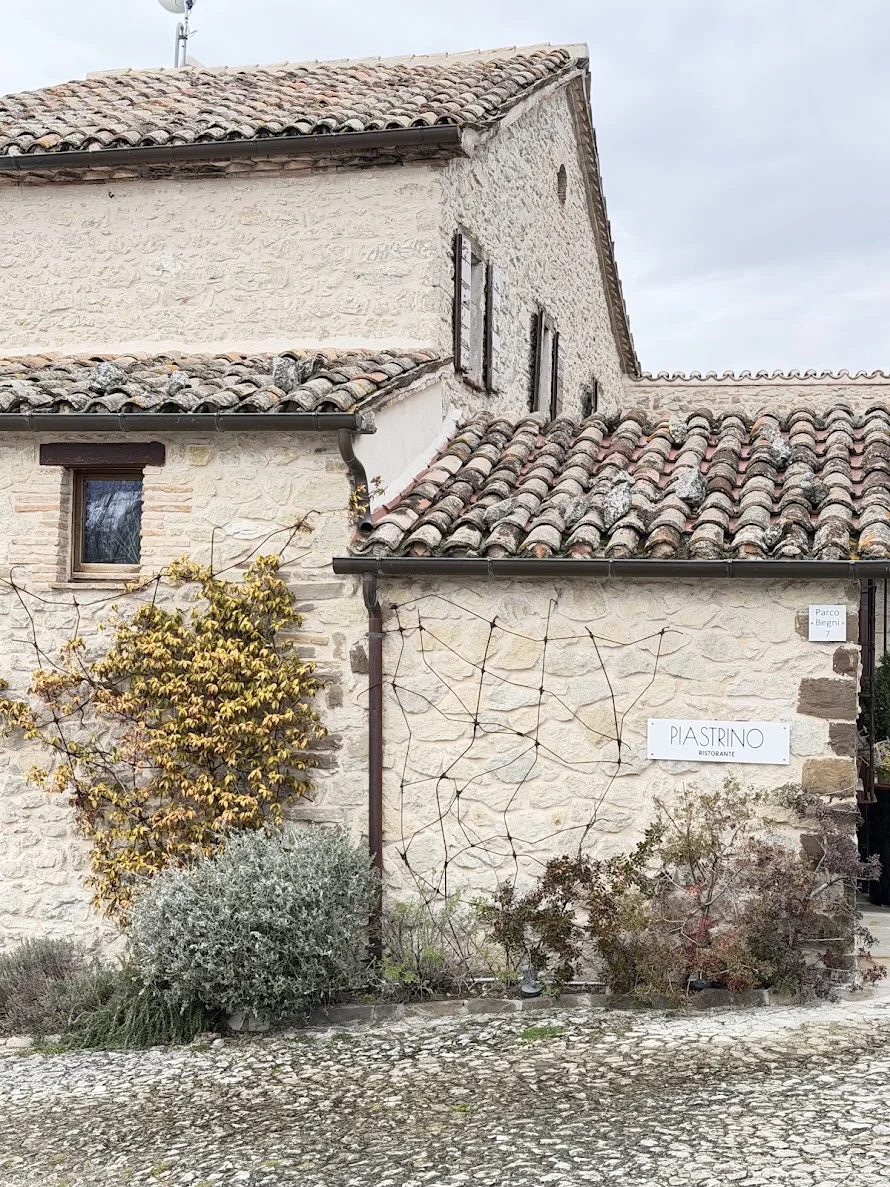
This corner of the Montefeltro has some of the best mountain cooking around: white and black truffles, porcini and St George’s mushrooms, formaggio di fossa, chestnuts, passatelli and cappelletti. For fine dining, Pennabilli has Il Piastrino, where Michelin-starred chef Riccardo Agostini does creative things with local herbs, mushrooms and produce. For something simpler and more relaxed there’s Bel Fico – osteria di paese on the main square, in rooms once decorated with works by Tonino Guerra. In Sant’Agata Feltria, Trattoria Ciccioni, an osteria since 1912 and on the register of historic Italian businesses, is a local institution for generous home cooking. Antenna dal Morino is popular for mushrooms, truffles and cappelletti, and Ristorante Il Palazzo has a special menu for the truffle fair.
In mid-June Pennabilli hosts Artisti in Piazza, an international festival of street performance, circus and theatre that has turned the village into an open-air stage for thirty years. July brings the Mostra Mercato Nazionale d’Antiquariato, one of Italy’s longest-running antiques fairs. In Sant’Agata Feltria, as well as the White Truffle Fair in October, there’s Il Paese del Natale (The Christmas Village) on Sundays from late November to mid-December, with Christmas markets, nativity scenes and fireworks.
Our tip: pick an autumn Sunday, set off in the morning and browse the truffle fair stalls in Sant’Agata, then head up to Pennabilli in the afternoon for the Orto dei frutti dimenticati. The sea and the hotel are an hour’s drive away.
Every hill town on its own page: history, what to see, opening times and how to get there from the hotel.
Santarcangelo di Romagna · Verucchio · Montebello and Torriana · San Marino · San Leo · Gradara · Montefiore Conca · Mondaino and Montegridolfo · Pennabilli · Sant’Agata Feltria · Saludecio · Gemmano and the Grotte di Onferno · Coriano · Talamello, Novafeltria and Maiolo
02Food and wine from the hills
Inland Romagna is great for food too: piadina, formaggio di fossa, truffles, olive oil and Colli di Rimini wines such as Sangiovese and Rebola. Plenty of osterias and wineries are right on the road between the villages. Back at the hotel, there’s our Romagna cooking.

03Autumn events inland
- National White Truffle Fair in Sant’Agata Feltria, on Sundays in October (from 4 October in 2026).
- Fiera di San Martino in Santarcangelo di Romagna, in November (7 to 11 November in 2026).
For the full calendar, see our Events in Rimini page. Dates and programmes can change, so always check the official websites.
04Why make Hotel Viking your base
- Open all year round, in autumn and winter too.
- Private car park opposite the hotel and 22 kW charging points for electric cars.
- Easy to get around: Viserbella is on the north side of Rimini, close to the roads to Santarcangelo, the Valmarecchia and San Marino.
- Buffet breakfast, and Romagna cooking at the end of the day.
- Tips from the family: the Antonioli family has been running hotels for more than 35 years and is always happy to recommend routes and trattorias.
05The villages at a glance: distance from the hotel
| Santarcangelo di Romagna | about 15 minutes by car |
|---|---|
| Verucchio | about 25 minutes by car |
| Montebello (Poggio Torriana) | about 30 minutes by car |
| Gradara | about 35 minutes by car |
| San Marino | about 35–40 minutes by car |
| San Leo | about 45 minutes by car |
| Starting point | Hotel Viking, Viserbella di Rimini, private car park opposite the entrance |
| When | all year; in autumn, food festivals, new wine and the Fiera dei Becchi |
Ask us at reception and we’ll suggest a route for the day, where to eat and what not to miss. When you get back, there’s our Romagna cooking and the garden. Keen cyclists should see our cycling holiday page, and for the holidays there are our Christmas and New Year and Easter and long weekends pages.
06What our guests say
What guests write on TripAdvisor.
Day trips
«You can book trips inland with the help of the reception staff»
Sea and hills
«great view from the balcony, towards the sea on one side and the hinterland on the other»
07Ask for a quote
Tell us your dates and how many of you there are, and we’ll send you a quote and a few ideas for days out. You can reach us on WhatsApp, by phone on 0541 721064 or by email at info@viking.rimini.it.
See also: Events in Rimini · Rimini, city of art · Where we are.
08FAQ
Which are the most beautiful villages inland from Rimini?
Among the most visited are Santarcangelo di Romagna, San Marino, San Leo, Gradara, Verucchio, Montebello (Poggio Torriana), Pennabilli and Sant’Agata Feltria: castles, Malatesta fortresses, caves, museums and views over the Valmarecchia.
How far is San Marino from Hotel Viking?
San Marino is about 35-40 minutes by car from Hotel Viking in Viserbella; Santarcangelo di Romagna is about 15 minutes.
When is the best time to visit the inland hills?
All year round. In spring and autumn the days are ideal for strolling around the villages; in autumn there is the National White Truffle Fair in Sant’Agata Feltria (Sundays in October) and the San Martino Fair in Santarcangelo (November).
Do I need a car to visit the villages?
A car is the most convenient way, especially for San Leo, Pennabilli and Sant’Agata Feltria. The hotel has a private car park opposite the building and 22 kW electric car charging points.
Is Hotel Viking open in autumn and winter?
Yes, Hotel Viking is open all year: you can combine the Rimini seaside with trips inland even out of season.
How far is Gradara from Hotel Viking?
About 35 minutes by car. Verucchio is about 25 minutes away, San Leo about 45.
Can you help us plan a trip inland?
Yes, at reception we’ll suggest itineraries, villages, wineries and restaurants based on your interests and the season.
Where can I leave the car before and after the trip?
In the private car park in front of the hotel, fenced and with CCTV, at €6 per night.


