
01Arch of Augustus at a glance
A day trip from Hotel Viking, the Antonioli family's 3-star hotel in Viserbella di Rimini: the Arco d’Augusto (Arch of Augustus) is Rimini's Roman gateway and the oldest surviving Roman honorary arch; it marks the start of the historic centre, where the Via Flaminia entered the city.
From Hotel Viking in Viserbella you can get there in about 25 minutes by car, 30 minutes by bike along the seafront, or by bus no. 4, which stops 100 metres from the hotel.
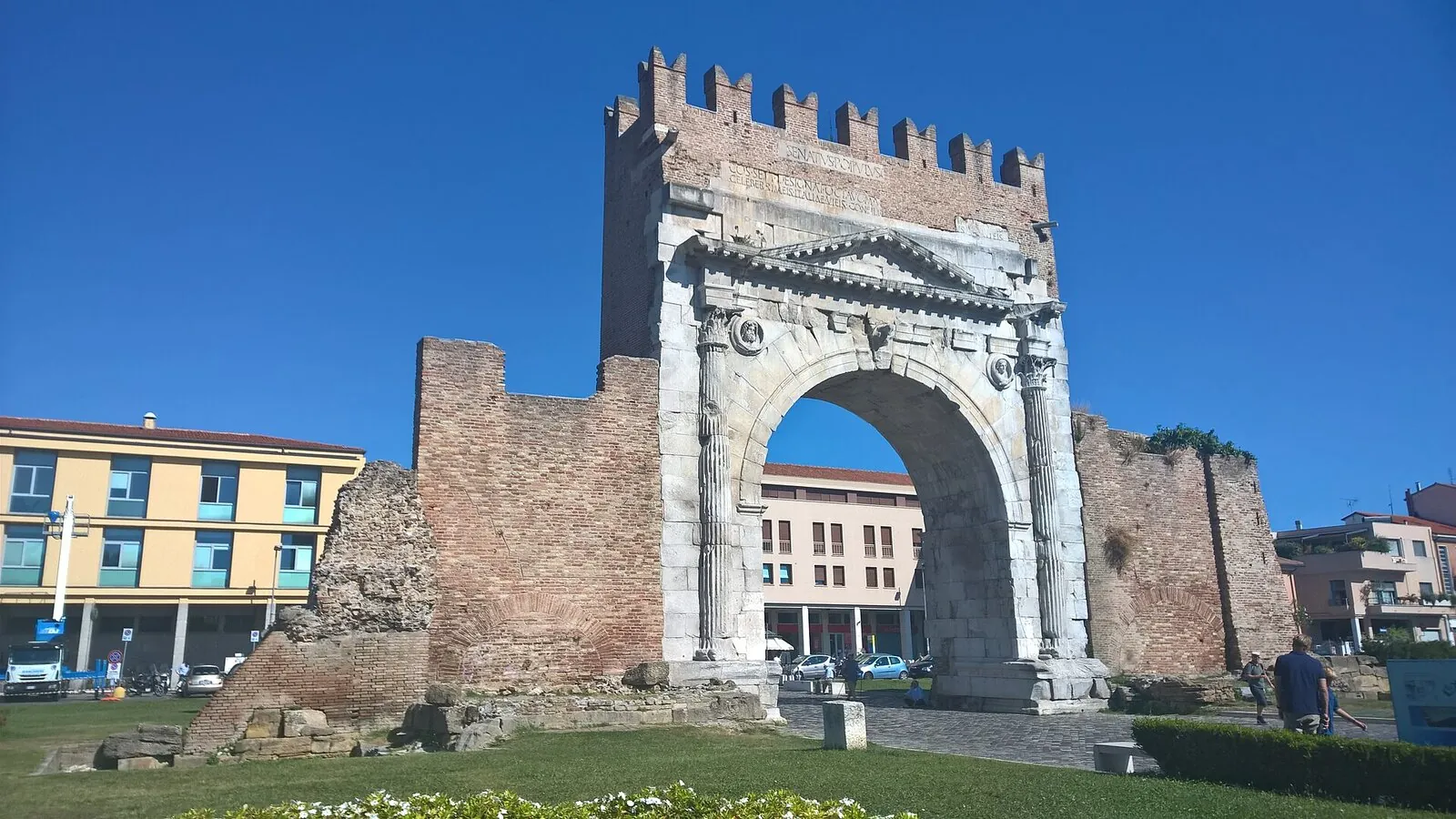
| Address | Largo Giulio Cesare, 47921 Rimini RN (start of Corso d'Augusto) |
|---|---|
| From the hotel by car | 10.0 km, about 25 minutes |
| By bike | 7.1 km, about 30 minutes |
| On foot | 6.8 km, about 90 minutes |
| By bus | bus no. 4 (stop 25) to the station, then about 15 minutes on foot |
| Entrance | It is an open-air monument, free to see at any time; it stands in Largo Giulio Cesare, at the start of Corso d'Augusto. |
02History
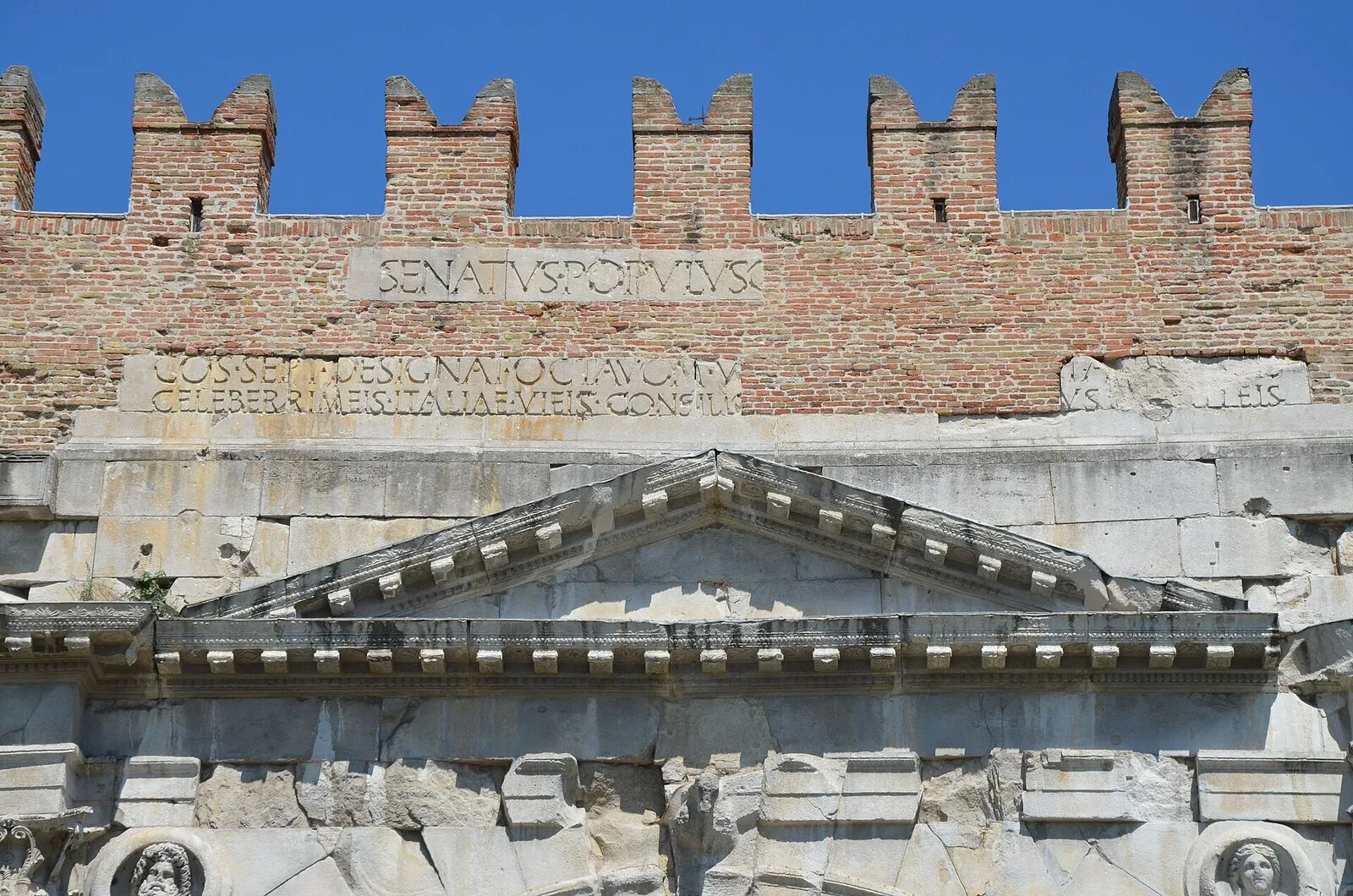
- It was built in 27 BC as an honorary gateway by order of the Roman Senate, to honour Octavian Augustus, as the inscription above the arch states.
- The inscription commemorates the restoration of the Via Flaminia (and of Italy's main roads) undertaken by Augustus.
- It is considered the oldest surviving Roman arch in northern Italy and, together with the Ponte di Tiberio (Tiberius Bridge), has always been a symbol of the city: it even appears on Rimini's coat of arms.
- It marked the entrance to the city for travellers arriving from Rome along the Via Flaminia, laid out by the consul Flaminius in 220 BC; from here you entered the decumanus maximus, today's Corso d'Augusto.
- Like the Ponte di Tiberio, it is faced with Istrian stone; the central archway is about 9 metres wide.
03What to see
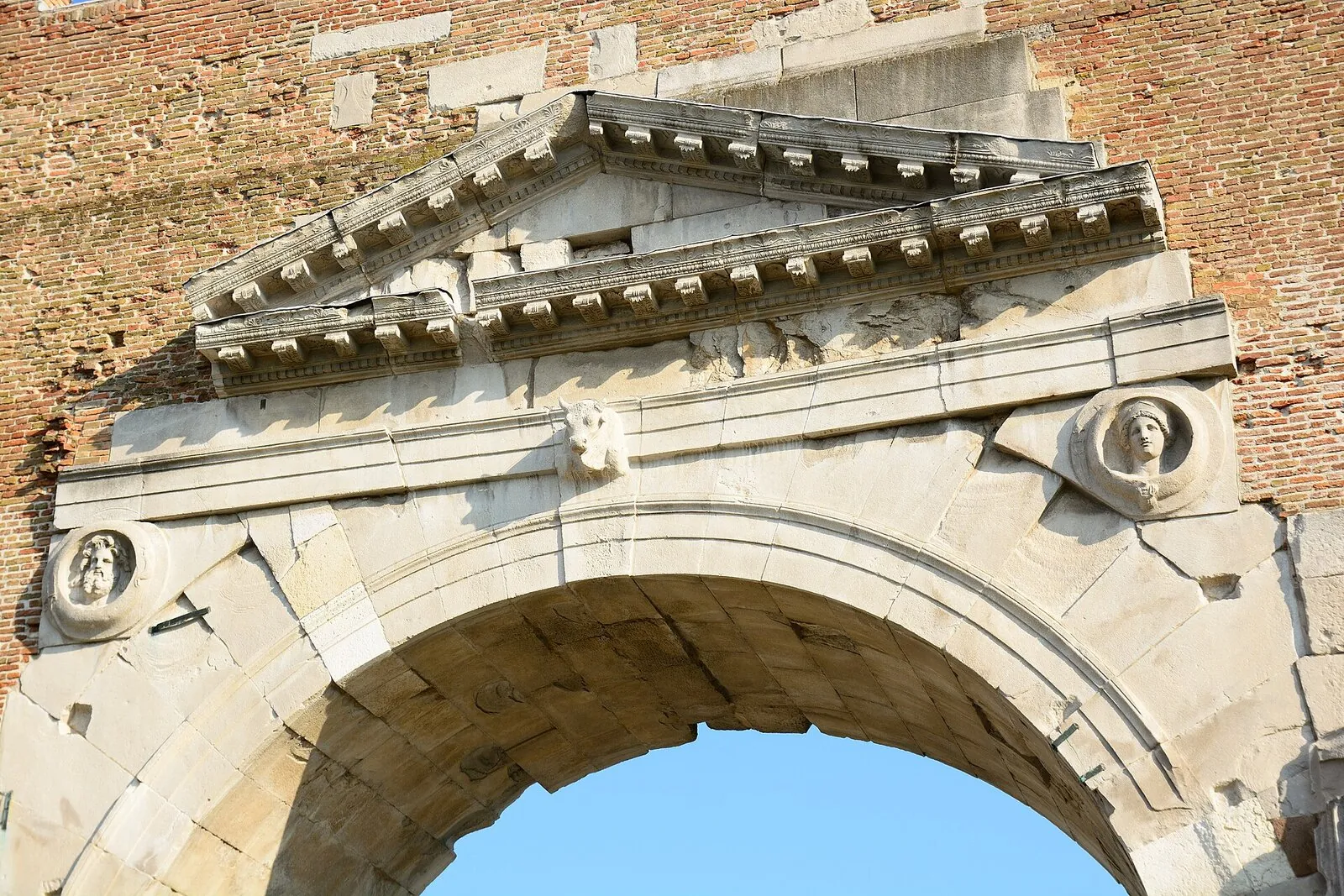
The opening is so wide that it could not be closed by gates: a message of peace (the Pax Augusta, after the victory at Actium in 31 BC) at the end of the civil wars.
The four clipei (roundels) depict deities: Jupiter and Apollo on the side facing Rome, Neptune and the goddess Roma on the side facing the city.
Originally it was topped by an attic with a statue of the emperor on horseback or in a four-horse chariot; the top, possibly brought down by earthquakes, was crowned with brick battlements in the Middle Ages.
It was part of the city's first circuit of walls, stretches of which, in blocks of local stone, survive on either side; it has stood on its own since the surrounding buildings were demolished in the 1930s (1936-1938).
Sources: Comune di Rimini · Visit Rimini · Wikipedia. Information checked in October 2026.
04Visitor information
It is an open-air monument, free to see at any time; it stands in Largo Giulio Cesare, at the start of Corso d'Augusto. From the station: follow viale Dante to Piazza Tre Martiri, then turn left to Largo Giulio Cesare.
Opening times and prices may change: always check the official website before you go.
Sources: Comune di Rimini. Information checked in October 2026.
05How to get there from Hotel Viking
By car: it is 10.0 km, about 25 minutes depending on traffic. The historic centre is a limited traffic zone (ZTL), so it's best to leave the car in one of the public car parks on the edge of the centre. Your space at the hotel stays reserved in our private car park.
By bike: 7.1 km, about 30 minutes, almost all on the Parco del Mare cycle path into Rimini; the hotel has bike storage, there are bikes to hire along the way and a bike-hire shop 1.5 km away (cycling holidays).
By bus: bus no. 4 stops 100 metres from the hotel (stop 25) and runs to Rimini railway station; from there it's about 15 minutes on foot.
06Nearby
- Corso d'Augusto, the ancient decumanus, which crosses the centre to the Ponte di Tiberio
- Piazza Tre Martiri (~350 m, about 5 minutes on foot)
- Tempio Malatestiano (Malatesta Temple) (~300 m, about 4-5 minutes on foot)
- Castel Sismondo and Piazza Cavour (about 600-700 m, 8-10 minutes on foot)
- Ponte di Tiberio (~950 m along Corso d'Augusto, about 12-15 minutes on foot)
- Tempio Malatestiano
- Domus del Chirurgo
- Teatro Galli and Piazza Cavour
More ideas on our things to do in Rimini, events in Rimini and inland hills and hilltop villages pages.
07What our guests say
What our guests say about the hotel's location and day trips.
Handy for everything
«excellent location, close to everything, the sea included, but on a quiet street.»
Day trips
«You can book trips inland with the help of the reception staff»
08FAQ
How old is the Arch of Augustus in Rimini?
It dates from 27 BC: it is more than 2000 years old and is considered the oldest surviving Roman arch in northern Italy.
Why does the Arch of Augustus have no gates?
The archway is so wide (about 9 metres) that it could not be closed with gates: it was a symbol of the peace Augustus achieved after the civil wars.
How far is Hotel Viking from the Arch of Augustus?
10.0 km, about 25 minutes by car or 30 minutes by bike along the seafront.
How do I get to the Arch of Augustus without a car?
By bus no. 4, which stops 100 metres from the hotel (stop 25) and runs to Rimini railway station, or by bike along the Parco del Mare cycle path.
Do I need a ticket for the Arch of Augustus?
It is an open-air monument, free to see at any time; it stands in Largo Giulio Cesare, at the start of Corso d'Augusto.
Where to stay nearby?
At Hotel Viking in Viserbella, a 3-star hotel 100 metres from the sea with a pool, private car park and Romagna cooking, just a few minutes from the centre of Rimini.


